


How to Choose an EV Charger for Residential or Commercial Properties
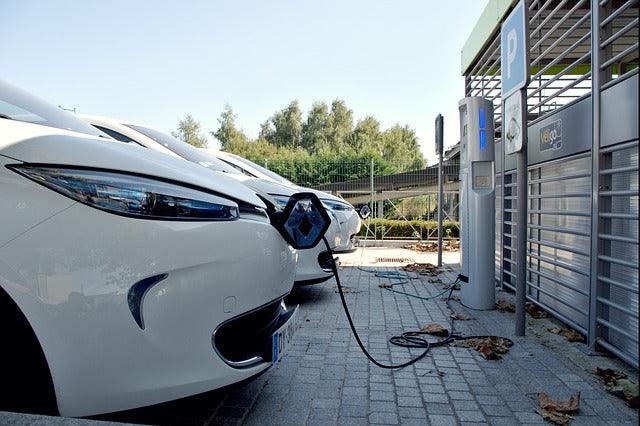
Residential and Commercial Charging Station Installation
In 2021, electric car sales doubled to 6.6 million vehicles sold globally. With sales on pace to exceed 8 million in 2023, consumers are now buying more EVs every week than they did in the entire year of 2012.
Electric Vehicles
Electric vehicles – and their required EV charging infrastructure – are also gaining favour within governments in the form of rebates and legislation.
For example, the Building Code now requires all new single-family homes to include rough-in electrical for EV chargers. In addition, the province requires most new structures that include underground parking to outfit at least 20% of spaces with EV charging stations. The remaining parking spaces must be designed to allow for the future installation of EV charging systems.
The Government of Canada has also passed legislation mandating the sale of electric vehicles. By 2035, all new light-duty cars and passenger trucks sold in Canada will be required to be zero-emission.
In order to improve electric vehicle charging infrastructure, Canada has established the Zero-Emission Vehicle Infrastructure Program. The initiative will provide $680 million by 2027 to address the lack of charging stations in Canada, one of the main barriers to EV adoption.
With the popularity of zero-emission vehicles and expanding regulations, the availability of EV chargers will begin to dictate where we shop, work, live, and play. As property owners consider their ideal EV charging solution, it’s important to understand the different options available.
Level 1 EV Charger
EV owners receive a Level 1 charger at the time of purchase. The charger plugs into a standard 120-volt outlet and delivers about 1.3 kW to 2.4 kW to the vehicle, which equates to about 8 km of range per hour. A Level 1 charger is the slowest charging option available and requires between 11 and 20 hours to fully charge an EV.
Level 2 EV Charger
A Level 2 EV charger delivers 3 kW to 19 kW to the vehicle, which is the equivalent of more than 50 km of range per hour. Using a Level 2 charger, an EV typically reaches a full charge within three to eight hours.
A 240-volt outlet, commonly used by clothes dryers and ovens, is required to power a Level 2 charger.
Level 3 DC Fast Charger
Level 3 chargers, also known as DC fast chargers, are typically found in public locations, such as shopping malls and office buildings.
A fast charger delivers between 50 kW and 350 kW to the vehicle, or up to 480 km of range per hour of charging. To achieve its rapid charging time, a Level 3 charger requires a direct connection to an electrical system.
While Level 1 and Level 2 chargers use alternating current (AC) power, a Level 3 charger uses direct current (DC) electricity.
Tesla Supercharger
To recharge its electric vehicles, Tesla developed its own Supercharger, which delivers between 72 kW and 250 kW, which translates into a 24 km per minute charge rate. It’s not possible to use a Supercharger to charge a non-Tesla EV, as the vehicle requires authentication before electricity is allowed to flow.
Level 4 Megacharger
EV chargers continue to evolve as the transportation sector adapts new technology. For example, Level 4, or Megachargers, are under development to meet the needs of heavy-duty transport trucks.
A Megawatt Charging Standard is under development as well as chargers capable of delivering more than 1 MW of power.
EV Charger Compatibility
Depending on the EV manufacturer, several charger connectors are available. Most electric vehicles use a J Plug (J1772) for Level 1 and Level 2 charging. To use a fast charger, a CCS (Combined Charging System) connector is the standard in North America. However, a handful of Japanese EV models require a CHAdeMO connector.
Tesla vehicles use a proprietary connector for all three charging levels. J Plug adapters are available for Tesla vehicles.
Procharge’s EV installation and maintenance teams, along with our energy and sustainability experts at Prosolaire, can help you determine the ideal EV charger solution for your property.