


What is bidirectional charging? Understanding the benefits for drivers and businesses
What Is Bi-Directional Charging?
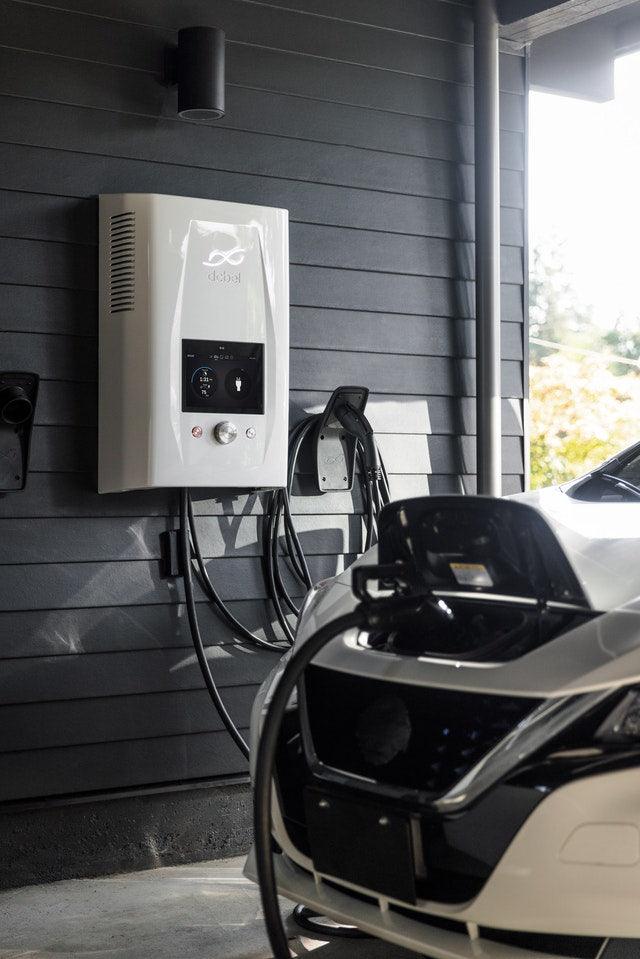
Unlike most existing EV charging technologies, which only send power in one direction—from a power source to a car’s battery—bi-directional charging allows the vehicle to send that power to be used by other appliances.In unidirectional charging, alternating current (AC) electricity is converted to direct current (DC) power that is stored in an EV battery to power the car. This conversion can happen either in the charger or in the vehicle, depending on which device is equipped with a converter.
With a bi-directional charger, the converter can turn the DC power from the car into AC electricity and transmit it to another recipient.
Types of Bi-Directional Charging
Bi-directional charging allows your car to send power to a variety of recipients, but the most common current applications involve sending power back to the grid or sending it to your home, business, appliances, or another vehicle.
-
Vehicle-to-grid (V2G): This is the most common application of bi-directional charging. Through a converter usually found in the charger, it allows vehicles to send power directly back to the grid. This can facilitate greater energy efficiency for a local power grid and result in cost savings by allowing charger owners to get paid for helping to maintain grid reliability—which we’ll discuss more below.
- Vehicle-to-home (V2H): V2H bi-directional charging turns your car’s battery into a backup power source for your home. This also allows for more efficient energy use and potential cost savings and usually relies on technology built into the charger.
- Vehicle-to-load (V2L): This is likely the most common type of bi-directional charging available today. With V2L charging, you can use your EV battery to power appliances and tools on the go. This type of charging relies on vehicles equipped with built-in converters and 120-volt outlets for charging appliances and devices, which are becoming increasingly common.
-
Vehicle-to-vehicle (V2V): Another application of V2L charging, this allows you to transmit power from one car to another.
3 Benefits of Bi-Directional Charging for EV Drivers and Charging Station Owners
By creating this two-way energy flow, bi-directional charging offers several benefits to EV owners, both in terms of potential savings and energy efficiency.
1.) Save Money on Energy Costs
Bi-directional charging allows vehicle owners to realize potential savings in two different ways. First, smart charging technology, in conjunction with bi-directional charging, can turn your car into an efficient power source for your home or business. You can set your vehicle to charge during off-peak hours or when renewable sources are available—when utility companies charge less for energy—and then use that energy to power your home during the day.
2.) Store Backup Power for Your Home or Business
Beyond cost savings, bi-directional charging can also provide peace of mind to homeowners and business owners. If you get caught in a power outage, V2H charging allows your vehicle to serve as a backup power source while the utility company makes repairs. The battery in a typical electric car holds about 60 kilowatt-hours of electricity—enough to power a home for about two days.
3.) Create a Portable Power Source
Thanks to bi-directional technology, in some cases, that same battery that can power your home can also go with you on the road to serve as a mobile power source. If you take your EV camping or to a job site, for example, you can use it to power appliances. In a pinch, you could even use it to provide power to someone else’s car.
Which Electric Cars Have Bi-Directional Charging?
Bi-directional charging relies on both chargers and vehicles that are capable of charging in both directions. Even if you have a bi-directional charger with its own converter, you’ll need a compatible vehicle to take advantage of it. Here is the list offering the bidirectional
-
Nissan Leaf ZE1
-
Outlander PHEV
-
Hyundai Ioniq 5
-
KIA EV6
-
BYD Atto 3
-
BYD HanEV
-
Ford F-150 Lightning
-
MG ZS EV (2022)
-
VW ID Models